Something went Wrong
Try entering your email again or contact us at support@qfi.org
Try entering your email again or contact us at support@qfi.org
You’ll receive an email with a confirmation link soon.
Nov 4, 2025
By Shoruq Naser
A Spark That Changed the Lesson
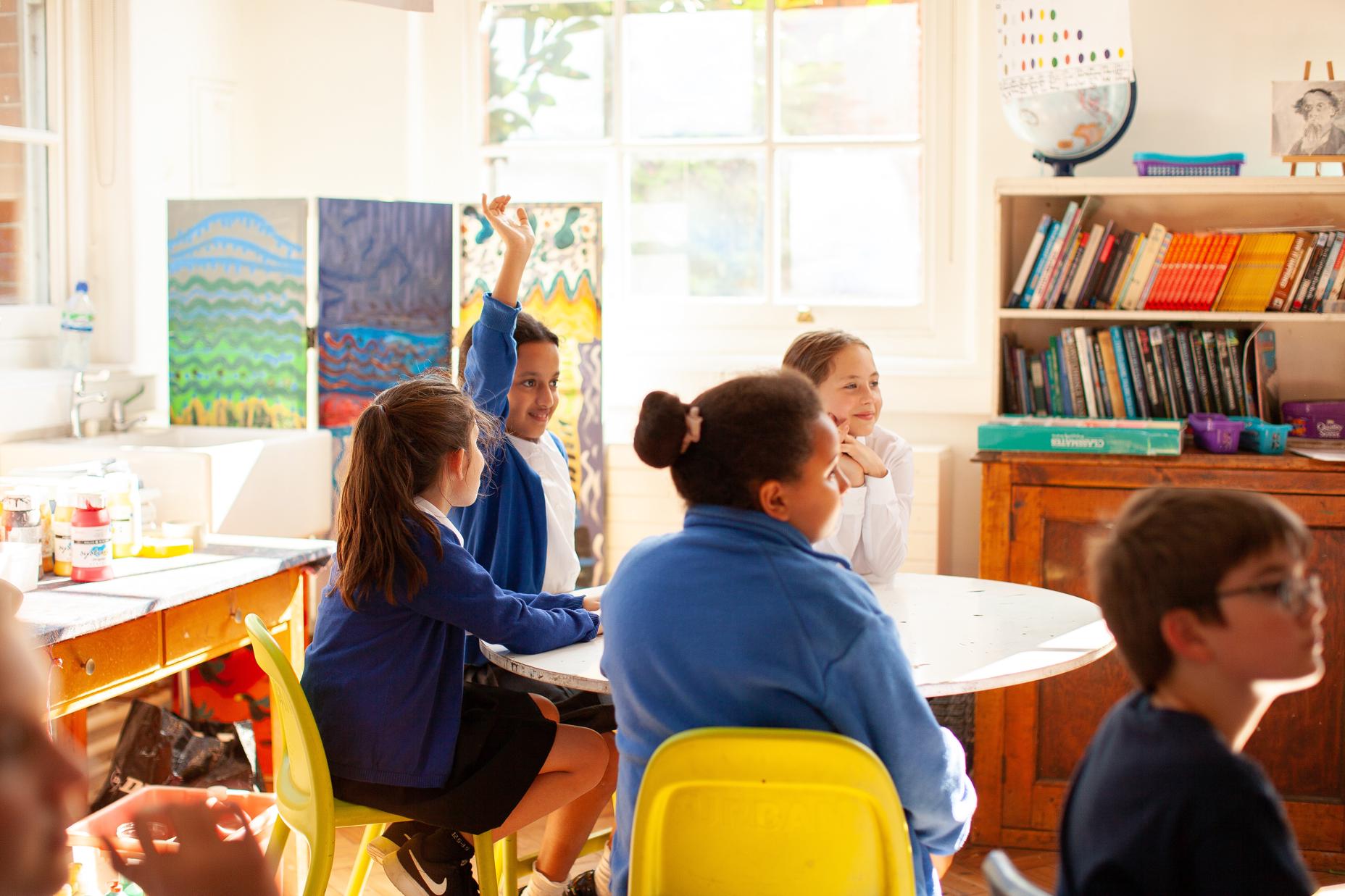
“Miss, can we really cook in Arabic?” a second grader asked me. His eyes were full of possibility. That question captured what I believe about teaching Arabic: it must be lived, not memorized. In my classroom, Arabic is a recipe to cook, a poem to perform, a comic magazine to publish, and even a wax museum where inventors speak through students’ voices.
Designing Units That End With a Stage
As an Arabic educator, I design IB‑aligned units rather than relying on pre‑made curricula. Each unit culminates in a real‑world performance task:
These authentic tasks transform Arabic from a subject into a life skill.
When Arabic Becomes a Recipe, a Market, and a Poem
To make language come alive, students host Arabic restaurants for peers, produce comic magazines about animals and habitats, and film cooking videos narrating ingredients and steps. In fifth grade exhibitions, they tackle global issues, perform skits, and write short poems in Arabic. Through these projects, students don’t just learn vocabulary; they use it creatively and confidently.
Building Arabic Learning Communities
I nurture spaces where learners feel connected to language, classmates, and identity. Collaborative storytelling groups let students write dialogues, poems, or skits and share them with younger grades. School‑wide events – such as markets and cooking showcases – invite families to hear children speak Arabic and build community. These experiences extend the language beyond classroom walls and strengthen bonds.
How QFI, ACTFL, and IB Work Together
Three frameworks guide my teaching:
Together they are a powerful companion for language educators. They help me design units that are rigorous yet flexible, blending intercultural understanding with clear benchmarks. By offering supportive scaffolding and just right challenges, I help students move through their zone of proximal development toward independence.
Conclusion: Language of Possibilities
Arabic education isn’t about memorizing lists; it’s about living the language. Whether in a marketplace, an exhibition hall, or a classroom turned café, Arabic opens doors for young learners to express themselves and connect with the world. Whenever a student asks whether we can cook, write poetry, or perform skits in Arabic, my answer is always yes.
Disclaimer: The views and opinions expressed in this blog are those of the author and do not necessarily reflect the views of Qatar Foundation International (QFI). While QFI reviews guest contributions for clarity and to ensure the content is valuable for our audience, the accuracy and completeness of the information are the responsibility of the author.
Image 1 of 2
Submit Your Own Blog!
We invite educators, researchers, and professionals in Arabic education to share their insights with our global community. Whether you teach, conduct research, or support Arabic language learning, your voice can spark innovation, drive change, and deepen understanding in the field of Arabic education.
I am an Arabic Language Acquisition teacher at Tarbiyah Academy, an IB World School in Maryland, where I teach Arabic as a second language to students in grades 2–5. With over ten years of teaching experience in both international and U.S. settings, I am passionate about designing engaging, inquiry-based Arabic curricula that align with IB principles and support multilingual learners. I hold ACTFL Superior certifications in speaking and writing, and I am currently pursuing a Master’s in Curriculum and Instruction (Arabic Track) at the University of Maryland.